Safari Packages
About Wilpattu National Park
Compare detailed morning, evening, half-day, full-day, private, and photography safari packages.
About Wilpattu
Why Wilpattu Is One of Sri
Lanka's Great
Safari Landscapes
This guide introduces Wilpattu National Park for travellers planning a Wilpattu National Park Safari, private Wilpattu Safari, leopard safari Sri Lanka, or bird watching Wilpattu experience.
About Wilpattu National Park
Wilpattu is Sri Lanka’s largest national park, known for dry-zone forest, sandy paths, and natural lakes.
History of Wilpattu
The park has a deep natural and cultural story, with landscapes that have shaped wildlife movement for generations.
Why Wilpattu is Special
Its quieter atmosphere, villus, and forest density create a different safari rhythm from more open parks.
Villus and Natural Lakes
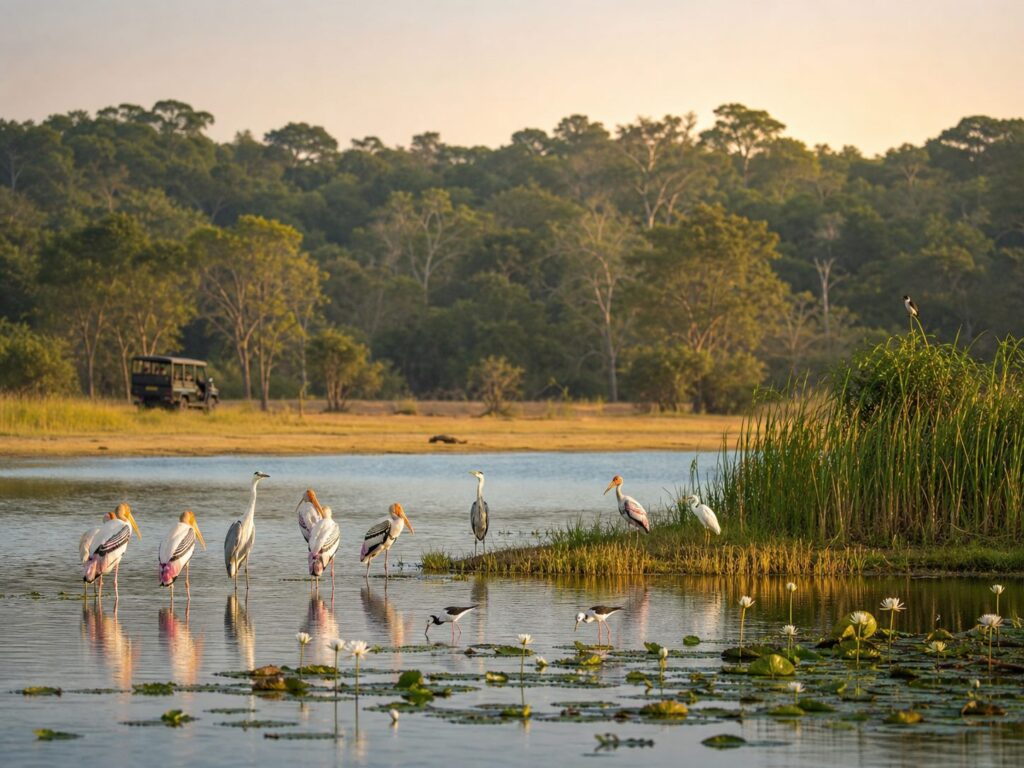
Villus are natural depressions that hold water and attract birds, mammals, and scenic safari moments.
Wildlife in Wilpattu
Leopards, elephants, sloth bears, deer, buffalo, crocodiles, and rich bird life are among the highlights.
Leopards of Wilpattu
The park is respected for leopard habitat, although sightings depend on timing, signs, and patience.
Bird Watching in Wilpattu
Water birds, forest birds, raptors, and migratory species make the park rewarding for birders.
Best Time to Visit
Mornings and evenings are best for light and comfort. Seasonal conditions affect visibility and animal movement.
Wilpattu vs Other Parks
Wilpattu often feels quieter and more forested, while other parks may offer different terrain and safari density.
Responsible Wildlife Tourism
The best safari respects distance, avoids pressure, follows park rules, and values the animal over the photo.
Bird Watching Wilpattu
Villus Create a Living Safari Map
Wilpattu’s natural lakes create open pockets in the forest. These areas can reveal birds, deer, crocodiles, elephants, and scenic views that make the park feel expansive and intimate at the same time.